
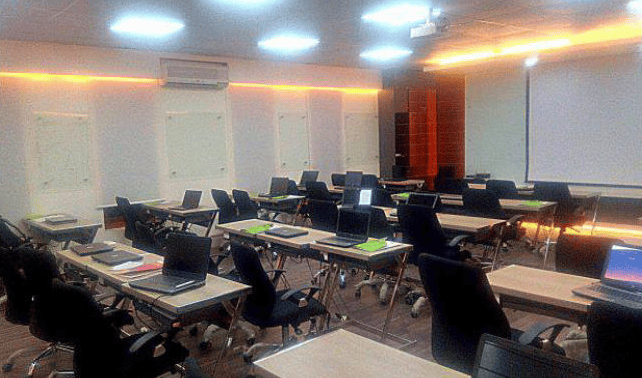
Training Room Interior Design in Dhaka: 1,000 sft, Prime Minister’s Office
A 1,000 sft training room that changes seating between sessions
A 1,000 sft training room at the Prime Minister’s Office in Dhaka, completed in 2015 for Aspire to Innovate (a2i). It was our first public-sector assignment and the start of the institutional portfolio we have built since.
Why a training room is harder than a meeting room
A meeting room has one arrangement. A training room has several, and it has to switch between them without anyone calling a technician.
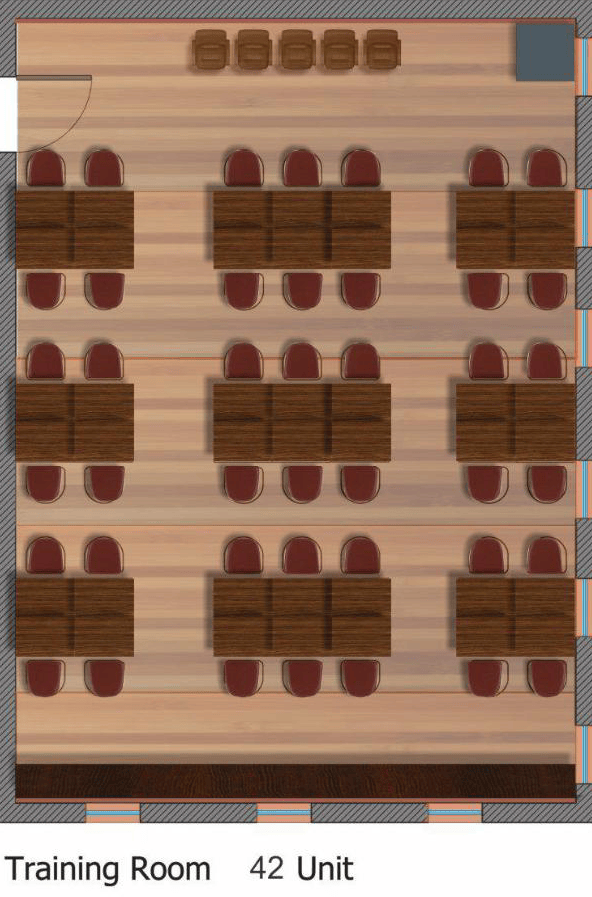
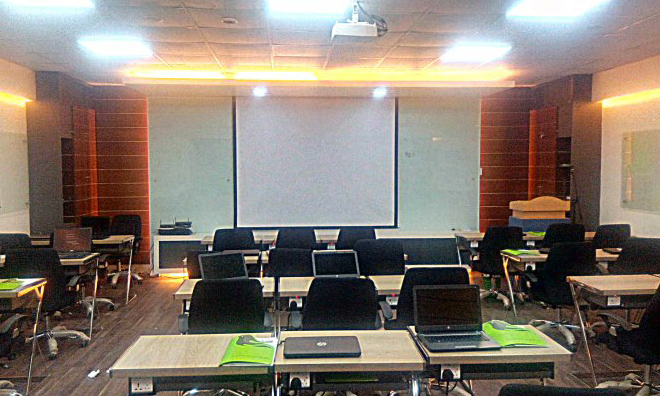
This room had to hold workshops, seminars and official programmes. Each of those wants a different seating plan. A workshop wants clusters. A seminar wants rows facing one direction. An official programme wants a formal head table. If the room only works in one of those arrangements, the other two happen badly for years.
So the design question was not how the room looks. It was what happens when someone needs to change it on a Thursday afternoon with an event on Sunday.
The detail that made it work: floor-mounted power and data points
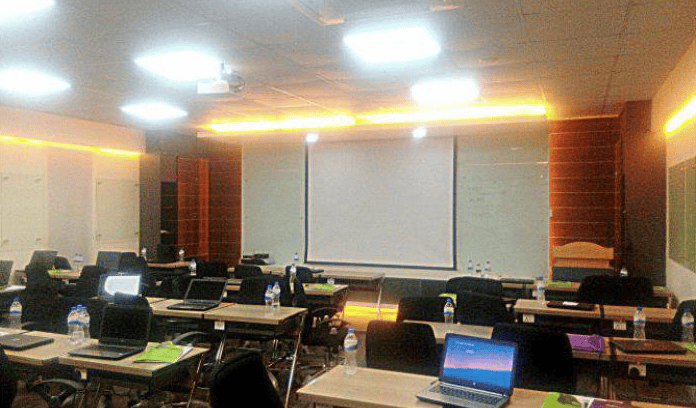
Power and data were brought to floor boxes rather than run from the walls.
That single decision is what lets the room reorganise. Wall-fed power ties every layout to the perimeter, so tables end up where the sockets are instead of where the session needs them. Floor points free the plan. Seating and equipment move, the power follows, and nobody is running an extension lead across a walkway in front of senior officials.
It costs more at the civil stage and it saves the room for its whole life. On any training or conference space we plan, this is the first thing we argue for.
Storage, and why it decides whether a room stays usable
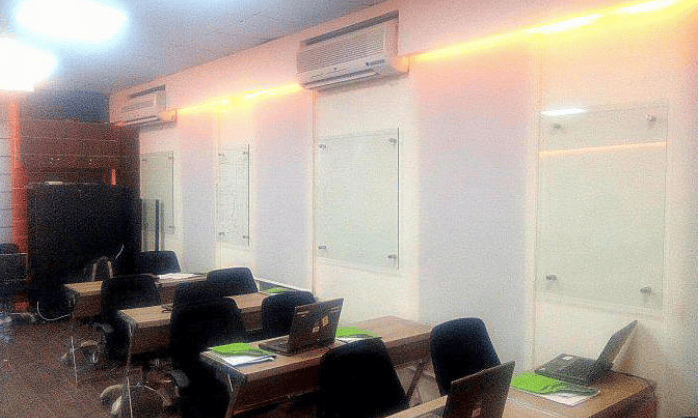
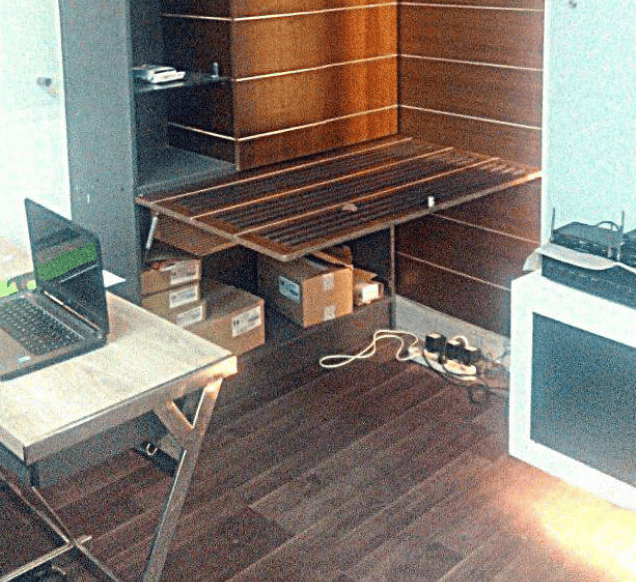
A flexible room fills up with the things that make it flexible: spare chairs, folding tables, equipment, materials from the last session. Without planned storage, they end up stacked in a corner and the room stops looking like the Prime Minister’s Office.
We built storage into the room rather than adding it later, so the reset after an event takes minutes and everything has somewhere to go.
Wooden floor, and the tone it sets
A wooden floor finish gave the room warmth against what would otherwise read as an institutional space. It is professional without being cold, which matters in a room where people sit for a full day.
It also handles the traffic. A flexible room means furniture moves across the floor constantly, and the finish has to survive that.
Working under protocol, for the first time
Strict security and official procedure shaped how the work was actually done. Access, timing, documentation and approvals all ran to rules we had not worked under before.
That was the real education. It sharpened how we handle documentation, approvals and site supervision, and it is why later work inside occupied public buildings went smoothly. You learn that the drawing is only part of the job and the process around it is the rest.
What this project led to
Public-sector work followed from 2015 onwards. The 750 sft ADB Wing meeting room in 2020, the K4DM conference and meeting rooms in 2021, and further projects at the Planning Commission, SPARRSO and ERD. a2i remained a client across four more offices, from IDB Bhaban in 2016 to Daak Bhaban in 2025.
The same convertible-table logic appears at a much smaller scale in the 600 sft FinLab open plan office, tuned for a young team rather than official protocol.
The planning rules we now apply to rooms like this one, from seat counts and table size to acoustics and AV, are set out in our guide to conference room design in Dhaka.
Training and meeting spaces remain a regular part of our office interior design work in Dhaka, for public and private clients alike.
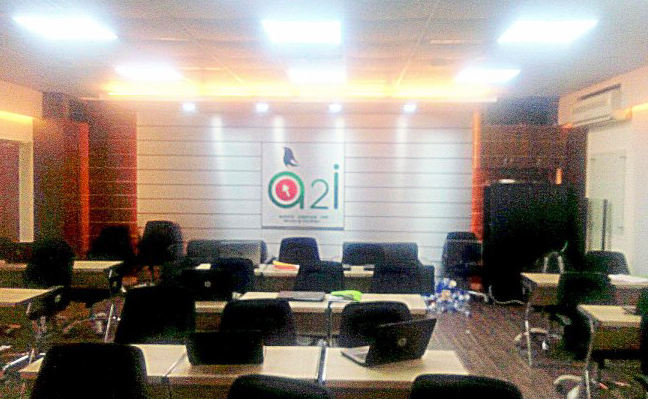
A training room earns its keep by how fast it can be rearranged.
This one moves between classroom, cluster and U shape without shifting anything heavy. If you are planning a space that has to do the same, we can talk through how it was done.